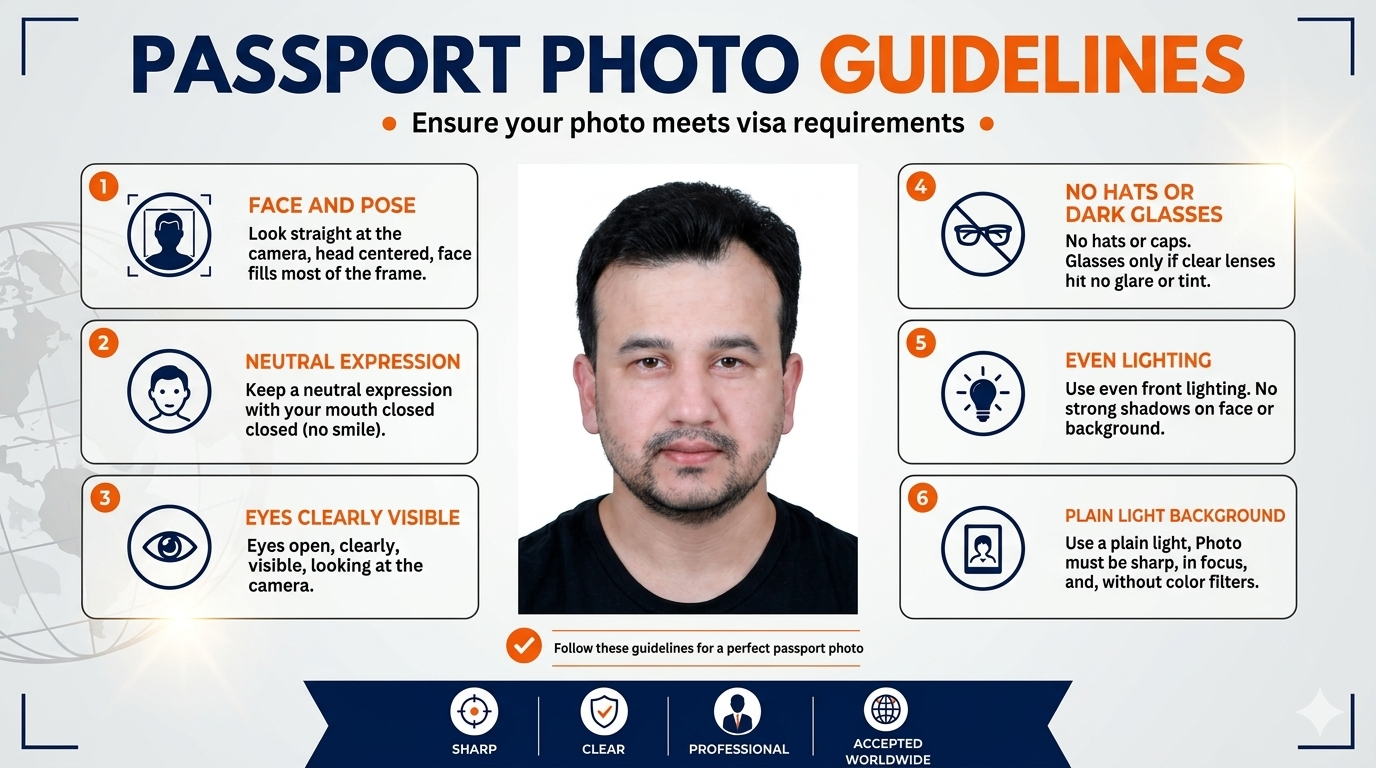
Travelers applying for a Dubai visa online must now pay special attention to their passport photographs. UAE immigration authorities and visa processing systems are becoming increasingly strict regarding photo compliance, and non-standard pictures are one of the leading causes of visa delays and rejections.
From today onward, applicants are strongly advised to submit only ICAO standard passport-size photographs for all Dubai visa and UAE visa online applications.
The new emphasis on ICAO-compliant photos is designed to improve:
- Facial recognition accuracy
- Immigration security
- Biometric verification
- Digital visa processing
- Airport identity matching
Many travelers unknowingly upload selfies, edited photos, blurred images, or incorrect passport-size pictures that do not meet international immigration standards. As a result, applications may face delays, additional document requests, or outright rejection.
This article explains everything you need to know about ICAO standard photos for Dubai visa applications in 2026.
What Is ICAO?
The International Civil Aviation Organization (ICAO) is a global aviation and travel standards authority that establishes international guidelines for:
- Passports
- Biometric identification
- Travel documents
- Facial recognition systems
- Immigration photo standards
Many countries, including the UAE, follow ICAO guidelines for visa and passport processing.
According to the uploaded ICAO guidelines document, passport applications and visa submissions with non-compliant photographs can be rejected by immigration authorities.
Why Dubai Visa Applications Are Rejecting Non-Standard Photos
Dubai and UAE immigration systems now use advanced digital verification technologies.
These systems compare:
- Passport image
- Visa application photo
- Airport biometric scans
- Facial recognition data
If the uploaded photo does not match ICAO specifications, the system may:
- Flag the application
- Delay approval
- Request resubmission
- Reject the visa application
This is why visa experts now recommend using only professionally captured ICAO-standard photographs.
Official ICAO Photo Requirements for Dubai Visa Applications
According to the ICAO guideline document, the following specifications are mandatory for passport and visa photographs:
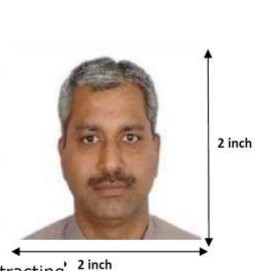
1. Photo Size Must Be 2x2 Inches
The image should measure:
- 2 inches by 2 inches
Incorrect sizing can cause biometric scanning issues.
2. Proper Brightness and Contrast Required
The image must:
- Have balanced lighting
- Not appear too dark
- Not appear too bright
Overexposed or underexposed images are not acceptable.
Download the details ICAO Guide
3. Natural Skin Tone Is Mandatory
Filters, beauty effects, or excessive editing are highly discouraged.
The uploaded ICAO standards clearly state that skin tone must appear natural.
Download the details ICAO Guide
4. Close-Up of Head and Shoulders
The photograph must show:
- Full face
- Head
- Partial shoulders
Wide-angle or distant photographs are not accepted.
Download the details ICAO Guide
5. Neutral Facial Expression
Applicants should:
- Look straight at the camera
- Keep a neutral expression
- Avoid smiling excessively
Face positioning should be centered and straight.
Download the details ICAO Guide
6. Sharp Focus and High Clarity
The face must:
- Be sharp
- Be clearly visible
- Have no blur
- Have no ink marks or creases
Low-quality mobile screenshots often fail this requirement.
Download the details ICAO Guide
7. Face Must Cover 70–80% of the Photo
ICAO standards specify that the face should occupy approximately:
- 70% to 80% of the image
- Roughly one inch in height from forehead to chin
Tiny faces inside large backgrounds are not acceptable.
Download the details ICAO Guide
8. Eyes Must Be Open and Visible
The applicant’s eyes:
- Must remain fully open
- Must not be hidden by hair
- Must be clearly visible
Hair covering the eyes can lead to rejection.
Download the details ICAO Guide
9. Glasses Rules
If prescription glasses are worn:
- Frames should be thin
- Lenses should be clear
- No flash reflection should appear
Tinted glasses or sunglasses are generally not acceptable.
Download the details ICAO Guide
10. Head Coverings Cannot Obscure the Face
Religious head coverings are allowed if:
- The full face remains visible
- No shadows appear
- Facial features are unobstructed
- Download the details ICAO Guide
11. Plain Light Background Is Mandatory
The photo must have:
- White background
- Plain light-colored background
- No patterns or objects
Busy backgrounds are unacceptable.
12. No Other People or Objects Allowed
The photo should contain:
- Only the applicant
- No chairs
- No decorations
- No family members
- No objects
Selfies taken in public places are commonly rejected.
13. Uniform Lighting Without Shadows
Lighting must:
- Be even
- Avoid side shadows
- Avoid shadows behind the head
Improper lighting affects biometric detection.
14. Red-Eye Photos Are Not Allowed
Flash reflection causing red-eye effect is prohibited.
15. No Lines or Marks Allowed
Photos containing:
- Scan lines
- Printer marks
- Editing marks
- Borders
- Creases
may be rejected.
16. Professional Studio Photos Recommended
The ICAO document specifically recommends professionally printed photographs with:
- Good resolution
- Continuous tone
- Professional quality
Polaroid images and poor printer outputs are considered unsuitable.
Why ICAO Standard Photos Matter for UAE Immigration
UAE immigration systems increasingly depend on:
- Artificial intelligence
- Biometric scanning
- Facial mapping
- Airport identity automation
A poor-quality image can prevent the system from correctly identifying travelers.
This creates:
- Visa approval delays
- Airport verification issues
- Additional immigration screening
Common Photo Mistakes Causing Dubai Visa Rejection
Selfie Photos
Many applicants upload casual mobile selfies.
These usually fail due to:
- Wrong angle
- Improper background
- Poor lighting
Heavy Photo Editing
Beauty filters, AI editing, and skin smoothing may distort facial recognition.
Cropped Passport Photos
Improper cropping often causes:
- Incorrect face ratio
- Head cutoff
- Poor alignment
Dark Shadows
Improper lighting can hide facial features.
Wearing Sunglasses
Dark glasses block eye recognition.
Old Photos
Submitting outdated pictures can cause mismatch issues at immigration checkpoints.
UAE Visa Online Applications Becoming More Strict in 2026
As UAE tourism continues growing, immigration verification standards are tightening.
Travelers applying for:
- Dubai Visa Online
- UAE Visa Online
- Tourist visas
- Visit visas
- Transit visas
should now expect stricter document verification.
Recommended Dubai Visa Application Links
For updated UAE visa application guidance:
Tips for Taking ICAO-Compliant Photos at Home
If using a mobile phone:
Use Natural Lighting
Stand facing soft daylight.
Use White Background
A plain wall works best.
Keep Camera at Eye Level
Avoid tilted angles.
Remove Filters
Do not use beauty mode or portrait enhancement.
Wear Neutral Clothing
Avoid colors blending into the background.
Keep Face Fully Visible
No hair covering eyes or cheeks.
Why Professional Studios Are Still Better
Although smartphones have improved, professional studios remain the safest option because they:
- Understand ICAO specifications
- Use proper lighting
- Ensure correct sizing
- Provide high-resolution images
This reduces rejection risk significantly.
Dubai Airports Use Advanced Facial Recognition
6Dubai International Airport uses advanced smart gate technology and facial recognition systems to process travelers quickly.
Poor-quality visa photos may interfere with:
- Identity verification
- Automated immigration systems
- Smart gate access
Important Advice Before Submitting Dubai Visa Application
Before uploading your photo:
- Zoom in and check clarity
- Ensure face visibility
- Verify background color
- Remove filters
- Check for shadows
- Confirm proper cropping
Small mistakes can create major delays.
UAE Immigration and Global Standards
Many international immigration systems now follow ICAO biometric standards.
Trusted references include:
Final Thoughts
Dubai visa processing in 2026 is becoming increasingly technology-driven. UAE immigration authorities now rely heavily on biometric verification and digital identity systems, making ICAO-standard photographs more important than ever.
From today onward, travelers applying for:
- Dubai Visa Online
- UAE Visa Online
- Tourist visas
- Visit visas
should ensure their photos fully comply with ICAO standards.
Using a non-compliant image can result in:
- Delays
- Additional verification
- Visa rejection
- Boarding problems
To avoid complications, applicants should use clear, professionally captured ICAO-standard photographs for all UAE visa applications.
Frequently Asked Questions (FAQ)
What is an ICAO standard photo?
An ICAO standard photo follows international biometric passport and visa image guidelines established by the International Civil Aviation Organization.
Why are Dubai visa photos getting rejected?
Most rejections occur due to:
- Poor lighting
- Wrong background
- Heavy editing
- Incorrect sizing
- Blurry images
Can I use a mobile phone photo for UAE visa?
Yes, but it must fully comply with ICAO specifications.
Are selfies accepted for Dubai visa applications?
Usually not. Selfies often fail ICAO standards.
What background is required?
Plain white or light-colored background.
Can I wear glasses in Dubai visa photos?
Yes, if:
- No glare exists
- Eyes remain visible
- Frames are thin
Is professional photography recommended?
Yes. Professional studio photos significantly reduce rejection risk.